Homemade Gingerbread Chef Embroidery Design Review
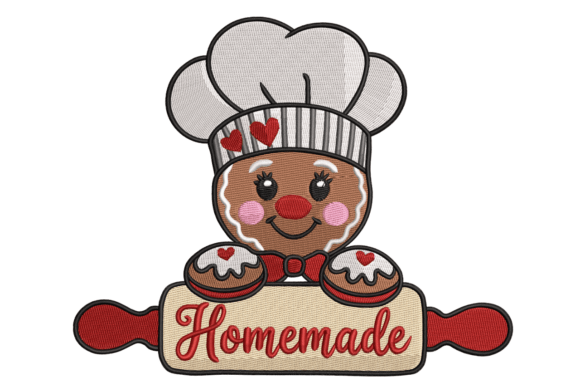
When I first opened the preview of Homemade Gingerbread Chef, I felt an immediate smile. The graphic shows a cheerful Gingerbread Man dressed as a chef, complete with a tiny homemade rolling pin. It’s impossible not to call it absolutely adorable, and that’s exactly the kind of instant emotional pull a small business needs on its branded merchandise. As an embroidery designer who has tested hundreds of files for commercial use, I look for three things: stitchability, brand personality, and versatility across physical products. This design delivers a playful, warm, and remarkably professional presence that sits somewhere between a classic bakery icon and a modern handmade mascot. It’s not trying to be elegant or minimalist; it’s proudly rustic, friendly, and decorative—perfect for a café, bakery, or any handcrafted brand that wants to turn a simple embroidered patch into a conversation starter.
First Impressions: A Playful Chef with Serious Branding Potential
The Homemade Gingerbread Chef is far more than a seasonal holiday motif. The chef hat, the rolling pin, and the cookie-like body immediately anchor it in the Kitchen Cooking category, but the expression and posture make it feel like a brand character. In my workflow, I always test whether a design can carry a logo’s weight. This one can. It reads as a genuine, approachable brand mark, not just a decorative embroidery file. The outlines are crisp, the smile is expressive, and the combination of gingerbread color and white chef accents gives you a naturally high-contrast palette that stitches cleanly on various fabric textures. Viewing it in black and white, as I recommend every business owner do first, the silhouette stays recognizable—a critical test for any machine embroidery design intended for patches, caps, or small areas.
Business Applications: Where Homemade Gingerbread Chef Shines
For small business merch, the design is a workhorse. I immediately see it sewn as an embroidered patch on a butcher-style apron for a bakery, where the rolling pin detail ties directly to the handmade promise. On a cap, placed as a center-front or left-chest accent, it becomes a miniature brand signature that doesn’t shout but warmly invites. Tote bags, too, gain a personality boost: the Homemade Gingerbread Chef turns a plain canvas carryall into a walking advertisement for a craft business. I’ve stitched similar designs on work shirts for a small café staff, and the response from customers is always “Where can I get one?”—that’s the kind of buyer engagement every Etsy seller or boutique owner dreams of.
- Apron embroidery: large enough to fill a bib front without becoming stiff, yet the stitch density feels balanced for frequent washing.
- Cap embroidery: works best on a structured front; test on a curved surface to avoid distortion of the chef hat.
- Tote bag design: the graphic holds up beautifully on cotton or canvas, and the playful theme masks any minor registration shifts on textured fabric.
- Embroidered patches: create a sew-on or iron-on patch for bakeries, florists, or pet brands that want a whimsical mascot on uniforms or customer gifts.
- Printable mockup: use the digital embroidery file to generate a realistic preview for clients; the design assets translate well to product photos.
This design is also a smart pick for event merch. A holiday market booth, a baking workshop, or a pop-up shop can use the Homemade Gingerbread Chef on limited-edition items—think tea towels, zipper pouches, or even product packaging accents. Because it’s so endearing, it elevates the perceived value of the finished product. Customers associate the embroidered character with care, craftsmanship, and a touch of nostalgia, which directly supports the small business’s brand identity.
Caution Points: When to Scale Down or Reinforce
However, no design is foolproof. I’ve learned to be careful with small patch sizes. The Homemade Gingerbread Chef has charming details—the rolling pin, the chef hat’s puff, the icing lines—that could close up if you drop below 2 inches in width. On a cap front, the curved surface can pull the chef’s smile out of shape if you don’t digitize or hoop properly. Always test on a sample cap with the same fabric texture and curve before committing to a full uniform run. Another caution: dark uniforms. If your base is black or deep brown, the gingerbread tone may blend; you might need to add a subtle outline or underlay thread to maintain contrast. Tiny lettering, if you ever add a shop name beside the design, should be placed separately because this graphic doesn’t include built-in text, and forcing it into one embroidery file could compromise the stitch density.
Think about fabric texture, too. A plush fleece or a loosely woven tote bag can swallow the finer details. I always recommend a medium-weight cutaway stabilizer and a topping layer for high-pile fabrics. On items that go through frequent washing—like staff aprons or kitchen towels—the design must be tested for thread tension and colorfastness. The cheerful thread colors (warm cookie brown, bright white, maybe a red bow or piping) are key; if the brown bleeds, the whole character loses its charm. A pre-wash and a 30-wash cycle test on a sample swatch will save you from returns later.
Brand Identity Impact: From Logo to Lovable Mascot
I’ve worked with dozens of handmade brands, and the ones that stand out use a visual mascot consistently. The Homemade Gingerbread Chef can become that mascot. It’s not just a seasonal file; it’s a brand asset that communicates warmth, expertise, and a personal touch—exactly what a bakery, a creative studio, or a boutique needs. On a product label sewn into a bag of handmade cookies, it signals artisanal quality. On a work shirt, it builds team unity and customer recognition. On a simple tote bag, it transforms a generic giveaway into a sought-after piece of small business merch. The playfulness also lowers the barrier for customer engagement: people smile, they snap photos, they share on social media. That organic reach is priceless for a craft business or Etsy seller.
When you use this design across multiple touchpoints—aprons, caps, packaging accents, and even embroidered gift tags—you create a visual consistency that builds trust. Shoppers start to recognize the little chef before they even read the shop name. That kind of recognition is what separates a professional brand from a hobby seller. The Homemade Gingerbread Chef carries a handmade product feel, but it’s executed with enough polish to be a commercial embroidery asset. It’s a perfect balance of folksy and finished.
Practical Embroidery Designer Notes for Flawless Stitching
Before you load this digital embroidery file into your machine, I want to share the exact steps I take when testing a design for a client’s branded merchandise. These apply directly to the Homemade Gingerbread Chef and will save you fabric, thread, and frustration.
- Test in black and white first. View the design as a one-color silhouette. If it still reads as a chef gingerbread man, you’re in good shape for small patch sizes and one-color brand variations.
- Check at small patch size. Reduce the design to 2 inches, then 1.5 inches, and stitch on a scrap of the actual garment fabric. Observe if the rolling pin, eyes, and icing details remain distinct.
- Review thread color contrast. The gingerbread body needs to stand out against the apron or cap color. On tan or light brown fabric, consider a slightly darker thread or a thin satin outline.
- Inspect spacing. Look at the gap between the chef hat and the head, and between the rolling pin and the hand. Too tight, and stitches may overlap and cause thread breaks; too loose, and fabric shows through.
- Confirm hoop size. The product description doesn’t list a specific hoop size, so check the file’s dimensions before purchasing. Know your machine’s limits and leave room for any additional text or design elements you plan to add.
- Test on real fabric. Don’t rely on digital previews alone. Stitch on the exact fabric you’ll use for the final product—canvas, twill, cotton, performance blend. Each fabric texture changes the outcome.
- Use the proper stabilizer. For tote bags and caps, a cutaway stabilizer is non-negotiable. For aprons and work shirts, a tear-away may suffice if the design isn’t too dense. Always test.
- Create a mockup for client approval. A printable mockup showing the design on a cap, apron, or tote bag helps the client visualize the finished product. Use the digital embroidery file to generate a realistic stitch preview.
- Compare it beside other design assets. If you’re building a brand kit, place the Homemade Gingerbread Chef next to your logo, wordmark, or other icons. Ensure the style and weight are consistent.
- Confirm commercial licensing. The product description doesn’t specify license terms, so always verify that the file is cleared for commercial embroidery, small business merch, and patch production before you sell a single finished product.
Throughout my years of digitizing and test-stitching, I’ve seen designs that look great on screen but fail under the needle. The Homemade Gingerbread Chef holds up beautifully when you respect its limits. The stitch density appears well-balanced for a medium-sized motif, and the design’s cheerful character translates to an embroidered patch that feels both durable and soft. The thread colors are typically straightforward—brown, white, maybe a dash of red for the bow—so you can keep your inventory lean while still achieving a polished look.
For small business owners looking to add a touch of personality to their custom apparel, this design is a smart investment. It’s more than a one-time holiday decoration; it’s a year-round brand ambassador that works on aprons, caps, tote bags, and even product packaging accents. The Homemade Gingerbread Chef brings the warmth of a Kitchen Cooking theme straight into the real world of commercial embroidery, where every stitch counts toward building customer trust and recognition. Treat it as a design asset, test it thoroughly, and you’ll be rewarded with a finished product that customers genuinely love—and that’s the ultimate goal of any handmade product or small business merch line.