Heart Gigi: A Thoughtful Embroidery Design for Meaningful Gifts
First Impressions: Delicate, Warm, and Quietly Confident
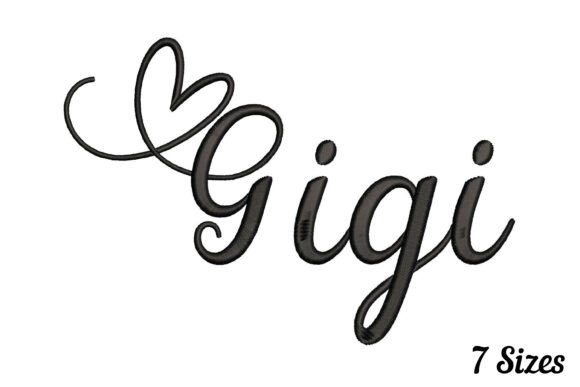
When I opened the Heart Gigi embroidery file, what struck me first wasn’t flash or scale—it was balance. The heart shape is soft-edged, not sharp or geometric, and the script “Gigi” flows inside it like ink drawn with gentle pressure. It’s a machine embroidery design that leans into quiet sentiment rather than bold statement. That matters—especially when you’re stitching something meant to carry emotion: a baby blanket for a new grandparent, a linen tea towel for a milestone birthday, or a custom tote bag for a boutique launch. Heart Gigi doesn’t shout “love”—it whispers it, and that whisper lands with sincerity.
A Real-World Test: Stitching It on a Linen-Cotton Pillow Cover
Last week, I used Heart Gigi on a 16×16-inch pillow cover made from medium-weight linen-cotton blend—exactly the kind of fabric many small shop owners and Etsy sellers reach for in nursery decor or grandparents’ gifts. I hooped it with light tear-away stabilizer (no cutaway needed here), chose soft ecru thread on natural linen, and stitched at normal speed. The result? Clean satin stitch outlining the heart, smooth fill stitch within the curves, and legible, airy script—even at 3.2 inches wide. No puckering. No skipped stitches. The design scaled beautifully without losing its delicate personality. Customers who see this on a finished product don’t think “machine-made.” They think “hand-chosen,” “thoughtfully made.” That subtle perception shift is gold for any craft business.
Where Heart Gigi Shines—and Where It Asks for Care
Heart Gigi works especially well for:
- Personalized gifts for grandparents: Think embroidered onesies, memory blankets, or framed hoop art with photos tucked beside the design.
- Small-batch apparel: Sweatshirt embroidery on crewnecks or relaxed-fit tees—positioned just below the collarbone or centered on the chest for quiet elegance.
- Boutique home goods: Tea towels, aprons, and pillow covers where softness and sentiment align with brand voice.
- Holiday embroidery: Not as a standalone motif on a sweater, but as a subtle accent—say, on the corner of a holiday kitchen towel or stitched onto a handmade ornament pouch.
But it’s not universally forgiving. Here’s where attention pays off:
- Thin or stretchy fabric: The fine script lines can blur if stabilizer isn’t matched carefully. On lightweight cotton jersey, I’d add a layer of iron-on tear-away and reduce stitch density slightly.
- Dark fabric backgrounds: The delicate script reads best with high-contrast thread—white or pale gray on navy or charcoal. Avoid matching thread tones unless you want intentional subtlety (and even then, test first).
- Curved surfaces like caps: Heart Gigi’s gentle curves adapt better than angular monograms, but keep it under 2.5 inches wide on front panels to avoid distortion.
- Frequent-wash items: While the stitch density feels balanced—not overly dense, not too sparse—I’d still recommend a light cutaway stabilizer for baby embroidery or personalized gifts meant to last years.
What Heart Gigi Adds to Your Finished Product
This isn’t just about legibility or coverage. Heart Gigi contributes to perceived value. When stitched cleanly on quality fabric, it elevates a simple tote bag from “nice” to “cherished.” For an Etsy seller listing personalized sweatshirts, it offers emotional resonance without trend-chasing—a smart differentiator in a crowded market. And for a small shop creating holiday gift sets, it adds cohesion: same design across a mug sleeve, a mini pillow, and a card envelope, all unified by tone, not just motif.
It also builds customer trust. Handmade product buyers scan for signs of care—consistent tension, smooth transitions between satin and fill stitch, no stray jump stitches. Heart Gigi delivers that baseline polish. That means less time editing mockups, fewer returns due to unclear lettering, and more repeat buyers who recognize your attention to detail.
Practical Designer Notes Before You Stitch
Before adding Heart Gigi to your next embroidery project—or listing it as part of a digital embroidery bundle—run through these checks:
- Test on scrap fabric first, especially if you’re using textured weaves (like burlap blends) or performance fabrics (e.g., moisture-wicking knits).
- Review stitch density visually—zoom in on the script in your embroidery software. Look for overlapping satin columns or tight corners that might snag on delicate threads.
- Confirm hoop size compatibility. Heart Gigi fits comfortably in a 4×4 hoop, but double-check your version’s dimensions before digitizing adjustments.
- Check thread color contrast in both light and dark mockups. What reads beautifully on white may vanish on heather gray.
- Use proper stabilizer—light tear-away for stable wovens, cutaway for knits or heirloom pieces. Don’t skip it just because the design looks simple.
- Verify licensing terms before selling finished items or bundling Heart Gigi as part of a commercial embroidery collection. Some digital embroidery files permit personal use only; others allow small business resale—read the details.
- Compare black-and-white mockups alongside color. This reveals how well the script holds up in minimal contrast—critical for branding consistency.
Final Thought: A Design That Serves the Moment
Heart Gigi isn’t built for viral trends or oversized statements. It’s built for moments that matter quietly: the first grandchild’s name stitched beside a heart, a retirement gift stitched on a favorite apron, a holiday tea towel gifted to someone who’s loved you longer than you’ve known how to say it. As a designer and embroidery reviewer, I appreciate how it respects the material, the machine, and the meaning behind the stitch. Use it with intention—not as filler, but as focus. And whether you're prepping for a craft fair, updating your Etsy listings, or designing a boutique’s holiday collection, let Heart Gigi do what it does best: hold space for warmth, without saying a word.