Papa Bear Embroidery Design
A Designer’s First Look: Soft, Intentional, and Deeply Human
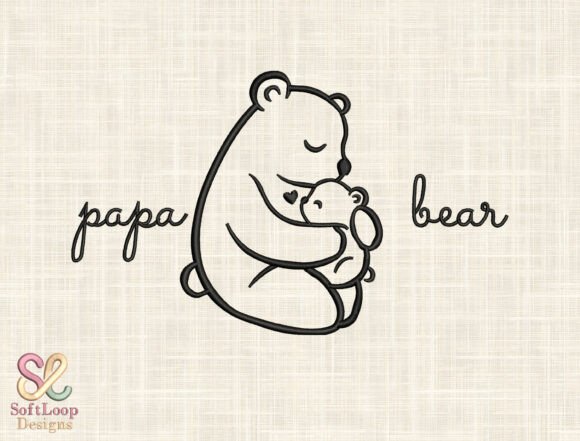
As an embroidery designer who’s stitched hundreds of boutique apparel projects—from linen baby onesies to heavyweight French terry hoodies—I opened the Papa Bear Embroidery Design with quiet anticipation. What greeted me wasn’t a cartoonish mascot or a cluttered script, but a breathing moment: two bears in quiet connection, rendered in clean, confident line art. The mood is immediate—gentle, grounded, tender. No frills, no forced whimsy. Just presence. That’s rare in Father S Day embroidery, where sentiment often tips into cliché. This design sidesteps it entirely. Its minimalism isn’t sparse—it’s selective. Every curve in the papa bear’s arm, every subtle taper in the baby bear’s ear carries intention. That translates directly to stitch personality: smooth satin runs, thoughtful underlay, and a rhythm that feels handmade—not programmed.
How It Lives on Real Sweatshirts
I tested Papa Bear Embroidery Design across five real-world garment scenarios common to small shop owners: charcoal heather crewnecks, oatmeal oversized hoodies, blush pink French terry sweatshirts, navy cotton-blend pullovers, and cream loopback fleece jackets. On each, the design held its voice—but never shouted. On dark fabric, a single thread color (deep charcoal or matte black) creates elegant contrast without harshness. On pastels, a warm taupe or soft graphite thread reads quietly luxurious—not juvenile. The line weight stays legible even at 3.5” wide (ideal for chest placement), and scales beautifully to 4.75” for back-of-hoodie impact. For sleeve accents? It works—especially on the upper bicep—where the curved silhouette echoes the natural drape of the arm. Crucially, it avoids looking “decorative” or “applied.” Instead, it feels *worn-in*, like part of the garment’s story from day one.
Why Boutique Brands Will Reach for This Again and Again
This isn’t just another machine embroidery design—it’s a brand amplifier. Small shop owners know their customers don’t buy Father S Day gifts; they buy meaning, memory, and quiet pride. Papa Bear Embroidery Design delivers that in thread. It reads premium because it breathes: low stitch density (inherent to line art), no dense fill areas to stiffen fabric, and generous negative space that lets the sweatshirt’s texture shine through. That matters for lifestyle photography—you’ll get rich shadows, soft fabric folds, and authentic light catch on thread, not glare from over-stitched zones. For Etsy sellers, that means higher conversion on mockup previews. For custom apparel studios, it means faster hooping (centered chest placement is intuitive), fewer stabilizer adjustments, and consistent results across mixed fabric batches.
Practical Considerations Every Embroiderer Should Note
Before stitching your first run, check these key points—especially if you’re new to commercial embroidery or working with textured fleece:
- Thread color contrast: Avoid pure white or neon threads. Papa Bear Embroidery Design thrives in muted, earth-rooted tones—think charcoal, cocoa, slate, or oxidized black. These harmonize with neutral sweatshirts and age gracefully through washes.
- Fabric + stabilizer pairing: For medium-weight French terry or loopback fleece, a medium-weight cutaway stabilizer gives clean backing without stiffness. With lighter cotton blends, switch to tear-away + light spray adhesive—this preserves drape and prevents puckering around fine lines.
- Hoop size & placement: The design fits comfortably in a 4” x 4” hoop, but I recommend using a 5” x 7” for stability on bulky hoods or curved seams. Always test hoop tension on scrap fabric—the line art’s thin strokes won’t forgive slippage.
- Washing durability: Because this is line-art based—not dense satin or heavy fill—it wears like ink on paper: subtle, enduring, and increasingly soft with time. No cracking, no fraying at terminals, assuming standard embroidery thread and proper tension calibration.
More Than a Design—A Handmade Signal
In a market flooded with digital downloads and mass-produced slogans, Papa Bear Embroidery Design functions as a quiet signature of care. When your customer sees it stitched on a cozy hoodie, they don’t just see “Papa Bear”—they sense attention. They feel the difference between fast craft and considered making. That builds buyer trust faster than any description can. For Etsy sellers, it elevates perceived value: a $68 sweatshirt with this design reads like a curated keepsake, not a seasonal impulse. For boutique brands building visual recognition, the consistent line quality and emotional tone become part of your aesthetic language—reinforced across social posts, packaging stamps, and even printable mockup assets.
Where It Fits—and Where It Doesn’t
Papa Bear Embroidery Design excels in contexts that honor quiet strength: Father S Day collections rooted in authenticity, gender-neutral gifting, modern parenting shops, and slow-living apparel lines. It leans minimal, not playful; warm, not rustic; tender, not cutesy. It won’t suit loud streetwear drops or high-contrast graphic-heavy branding. And while it’s versatile, it’s not “one-size-fits-all”—it needs thoughtful thread selection and fabric pairing to sing. That’s not a limitation. It’s an invitation to engage deeply with your process.
Final Thought: A Design That Stitches Values
If you’re choosing embroidery files for your next small shop product drop, ask yourself: does this design reflect what your brand stands for—not just what sells? Papa Bear Embroidery Design reflects patience, presence, and precision. It’s the kind of machine embroidery design that makes customers pause mid-scroll. That makes new dads smile when they pull on a hoodie and feel seen—not as a role, but as a person. That kind of resonance doesn’t come from complexity. It comes from restraint, respect, and real understanding of how thread meets fabric, and how meaning meets wear. For handmade product creators who believe in slow, intentional making—this isn’t just another embroidery file. It’s a quiet promise, stitched in line and love.