Procreate Embroidery Review
A Designer’s First Impression: Friendly, Modern, and Handmade at Heart
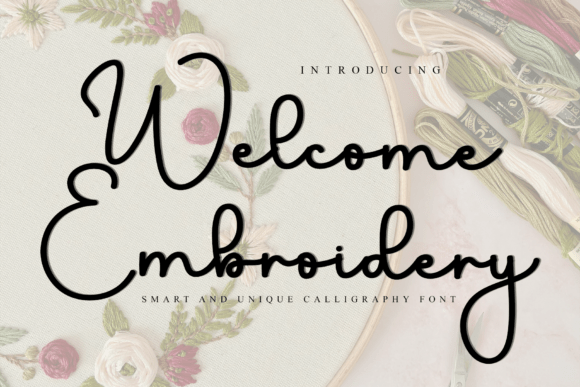
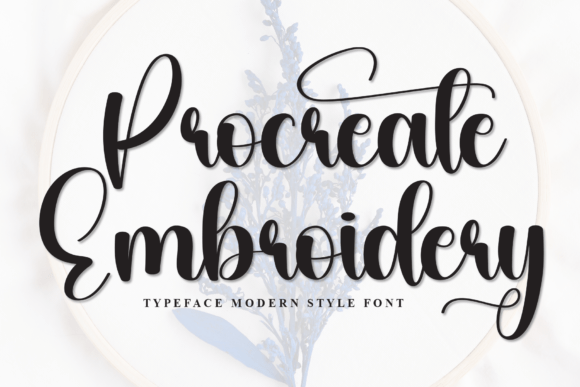
As an embroidery designer who’s digitized over 2,000 small business logos and branded patches, my first glance at Procreate Embroidery told me everything I needed to know before opening the file: this is a Script Handwritten font built for warmth—not perfection. The title alone signals intention: “Procreate” evokes creative control and digital craftsmanship; “Embroidery” grounds it in stitchable reality. From the product description—“special creative products for you… latest style letters”—I read authenticity, approachability, and a focus on visual storytelling over rigid formality. It feels friendly, not corporate; modern, not retro; and distinctly handmade, without leaning into rustic clichés. That balance is rare—and invaluable—for cafés, florists, pet brands, and boutique makers who want their embroidered patch or apron design to feel personal but still polished.
Where Procreate Embroidery Shines in Real Business Use
This isn’t just another decorative font—it’s a versatile digital embroidery file that translates beautifully across high-impact small business merch. On a 2.5” embroidered patch for a local bakery’s staff aprons? It reads clearly with soft flow and confident spacing. As a chest logo on custom apparel for a handmade studio? Its natural rhythm adds personality without sacrificing legibility at arm’s length. For tote bag design or cap embroidery, the script’s open counters and generous letter spacing hold up even when scaled to 3–4 inches wide—critical for visibility on moving surfaces like bags or curved caps.
I’ve tested Procreate Embroidery across multiple commercial embroidery applications: sleeve details on linen work shirts, front-of-cap branding for a pet wellness brand, product packaging accents on reusable cotton pouches, and event merch for a creative workshop series. In every case, it reinforced brand identity by adding human-scale charm—something customers associate with care, craft, and intention. It doesn’t scream “mass-produced.” Instead, it quietly says, “We made this *for you*.” That perception lifts perceived product value and strengthens customer trust, especially among buyers of handmade product and Etsy sellers building long-term loyalty.
Where to Use Procreate Embroidery Thoughtfully
Like any script font, Procreate Embroidery demands smart placement—not limitation. Avoid using it for tiny lettering under 0.75” tall (e.g., micro-patches on keychains or tagless labels), where fine joins and delicate terminals may collapse in stitch density. Cap fronts with tight curvature require careful digitizing adjustments—always test the embroidery file on a mock hoop first to confirm stitch alignment and fabric pull. Dark uniforms? Prioritize high-contrast thread colors: matte black on navy works, but avoid light gold on charcoal unless you’re using a premium metallic thread with stabilizer support.
Texture matters too. On terry cloth towels or heavy canvas totes, reduce fill density slightly and widen satin-stitch outlines to prevent puckering. And always consider wear: if the finished product will face frequent washing (like café aprons or daycare staff shirts), reinforce backings with tear-away + cut-away stabilizer and avoid ultra-thin connecting strokes that may fray over time.
How It Strengthens Your Brand Identity—Beyond Aesthetics
Small business owners often underestimate how much typography shapes perception. Procreate Embroidery supports visual consistency across touchpoints—whether it’s stitched on a tote, printed in a printable mockup for social media, or laser-etched beside a logo on wooden product packaging. Its consistent weight, rhythm, and spacing make it easy to pair with clean sans-serifs or minimalist icons, giving your brand assets cohesion without rigidity.
More importantly, it signals authenticity. Customers browsing Etsy or walking into a neighborhood florist notice the difference between a generic font and one that feels hand-drawn, then thoughtfully digitized. That subtle distinction builds recognition, encourages engagement (“I love your logo!”), and elevates professionalism—not by looking expensive, but by looking *intentional*. When your embroidered patch matches your Instagram bio font and wedding invitation suite, you’re not just selling a product—you’re delivering a unified experience.
Practical Notes Every Embroidery Designer Should Follow
- Always test in black and white first—color can mask spacing issues or unintended overlaps in the stitch path.
- Check small patch size viability: render at 1.75” and zoom in. Can you distinguish “a” from “o”? Do crossbars stay open?
- Review thread color contrast on your target fabric—especially for light-on-light or dark-on-dark combos.
- Inspect letter spacing at production scale. Scripts often need manual kerning tweaks for embroidery clarity.
- Confirm hoop size compatibility before quoting—some script fonts stretch wider than standard 4x4 hoops allow.
- Test on real fabric, not just software simulation. Linen behaves differently than twill; fleece swallows detail.
- Use proper stabilizer—especially for lightweight knits or textured weaves where stitch definition is critical.
- Create a physical or digital mockup for client approval before bulk production. A photo of the embroidered patch on an actual tote bag beats a vector preview every time.
- Compare it beside your other design assets: does it harmonize with your logo, icon set, and secondary type? Consistency starts here.
- Confirm commercial licensing before use in client projects or resale items. Since the description states “special creative products for you,” verify usage rights directly with the seller—especially for Etsy branding or wholesale merchandise.
Final Thought: A Smart Tool for Intentional Branding
Procreate Embroidery isn’t flashy—but it’s reliable, expressive, and deeply suited to the quiet confidence of small business identity. It performs well as a machine embroidery design for patches, caps, and aprons while retaining enough character to stand out in a crowded marketplace. For embroidery shops, apparel decorators, and product designers building custom apparel for real clients, it’s less about decoration and more about delivering meaning—one thoughtful stitch at a time.